
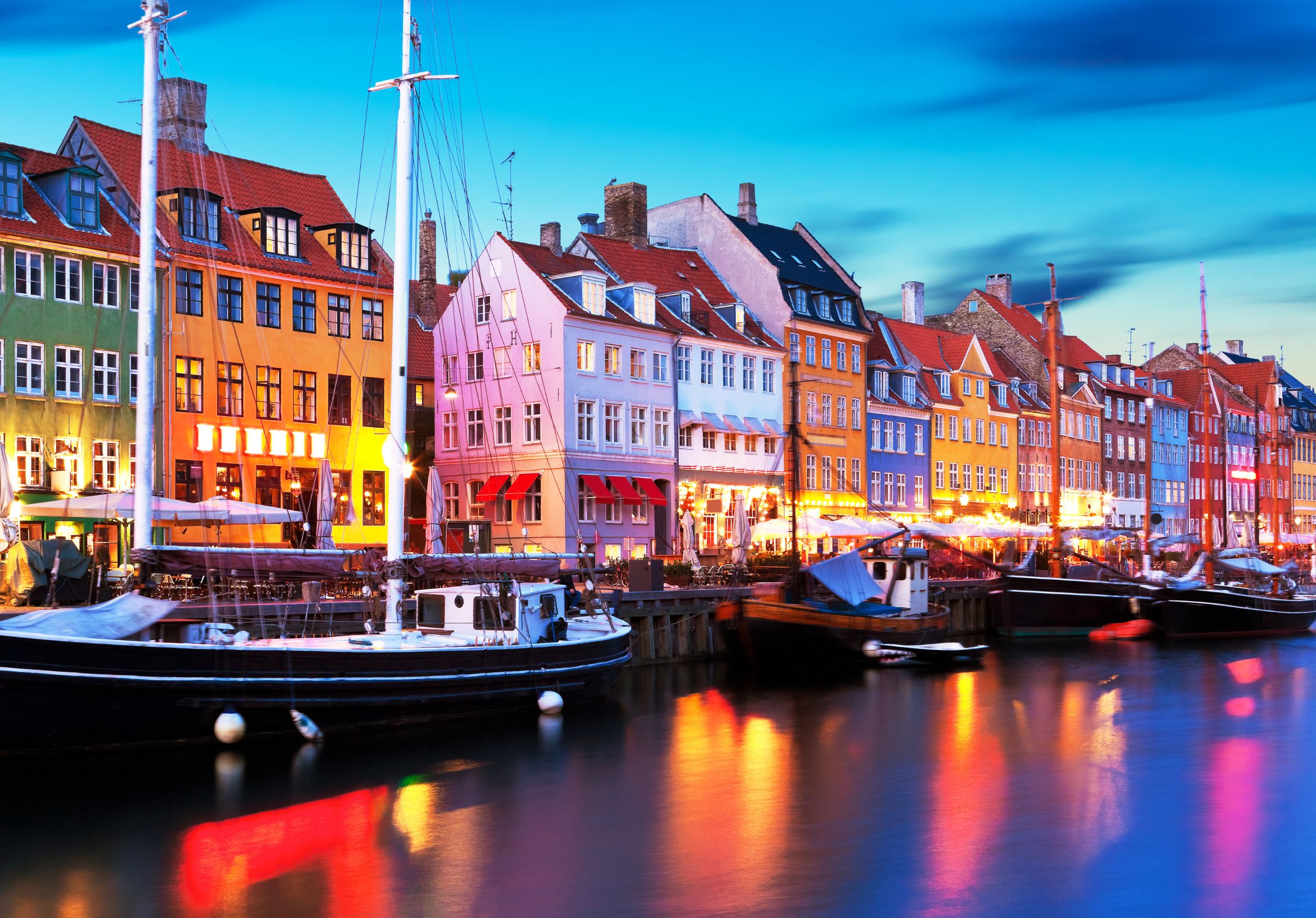
Nestled in the heart of Copenhagen, Nyhavn (literally translating to “New Harbor”) is a captivating canal district that serves as a living museum of Danish maritime history and architectural charm. Established in the 17th century during the reign of King Christian V, this vibrant waterfront was originally constructed to facilitate maritime trade and connect the inner city with the sea.
When first developed between 1670 and 1675, Nyhavn was a bustling commercial port where ships from around the world would dock, unload their cargo, and sailors would seek entertainment in the numerous taverns and brothels that lined the canal. The area was notoriously rough, with a reputation for rowdy behavior and maritime excitement.
Architectural Splendor: The Colorful Facades
Perhaps the most iconic feature of Nyhavn is its row of meticulously preserved, brightly colored townhouses that create a picturesque backdrop along the canal. These narrow buildings, painted in a stunning palette of yellows, reds, blues, and greens, were historically owned by different social classes, with each color and style telling a unique story of Copenhagen’s social stratification.
The houses range from humble sailor dwellings to elegant merchant residences, some dating back to the 1600s. Many of these structures have been carefully restored, maintaining their original architectural integrity while serving as homes, restaurants, museums, and cultural spaces.
Literary and Cultural Connections
Nyhavn boasts a rich cultural legacy, most notably as the home of Hans Christian Andersen, the legendary fairy tale writer. Andersen lived at three different addresses in Nyhavn during the 19th century, including No. 20, No. 67, and No. 18. These residences are now commemorated with plaques, attracting literary enthusiasts from around the world.
Today, the area has transformed from a rough maritime hub to a sophisticated cultural destination. Street musicians, outdoor cafes, historic ships, and art galleries have replaced the old taverns, creating a vibrant atmosphere that celebrates both Copenhagen’s maritime past and its contemporary creative spirit.
Tourism and Economic Impact
According to Copenhagen’s tourism statistics, Nyhavn attracts over 2 million visitors annually, generating significant economic value for the city. The district has become a prime example of successful urban regeneration, converting historical maritime infrastructure into a thriving tourist and cultural destination.
The area now hosts numerous restaurants, boutique shops, and historical exhibits that showcase Danish maritime culture. Traditional wooden ships are permanently moored along the canal, serving as floating museums that offer visitors a glimpse into Denmark’s rich nautical heritage.
Preservation and Modern Significance
In 1980, Nyhavn underwent extensive restoration efforts to preserve its historical character while adapting to modern urban needs. The Danish government and local authorities have invested significantly in maintaining the area’s architectural authenticity, ensuring that it remains a living testament to Copenhagen’s maritime history.
Modern Nyhavn seamlessly blends historical preservation with contemporary urban design. The canal is now a protected historical environment, with strict guidelines governing any modifications to ensure the district maintains its unique character and historical significance.
Nyhavn represents more than just a picturesque canal district; it is a vibrant narrative of Copenhagen’s evolution. From its origins as a rough maritime port to its current status as a cultural landmark, Nyhavn embodies the resilience, creativity, and maritime spirit of Danish urban life. Its colorful facades, rich history, and continuous reinvention make it not just a tourist destination, but a living, breathing symbol of Copenhagen’s enduring charm.