
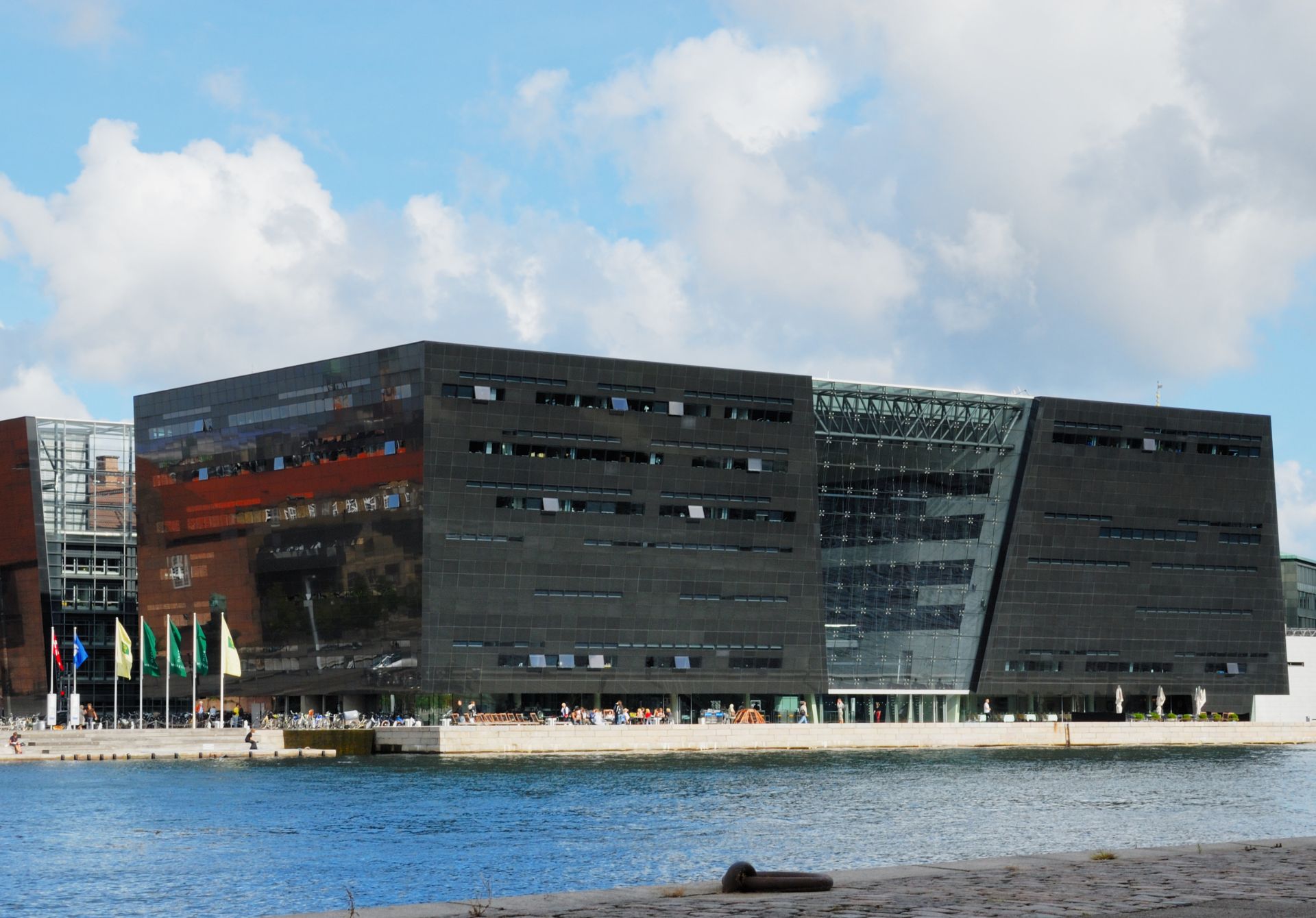
Nestled along the picturesque Copenhagen harbor, the Royal Danish Library’s extension, known as the Black Diamond, stands as a testament to modern architectural brilliance and cultural significance. This extraordinary building is more than just a library—it’s a symbol of Denmark’s commitment to knowledge, design, and public spaces.
Architectural Design: A Gleaming Obsidian Gem
Exterior Magnificence
Designed by renowned Danish architects Schmidt Hammer Lassen, the Black Diamond was completed in 1999 and immediately became a landmark that captures the imagination. Its exterior is clad in polished black granite and glass, creating a stunning reflective surface that changes appearance with the light, mirroring the sky and water surrounding it.
Structural Innovation
The building’s unique design incorporates a dramatic slanted facade that seems to lean towards the harbor, creating an optical illusion of movement and dynamism. Its 24,000 square meters of space are not just visually impressive but functionally sophisticated, housing multiple levels of library facilities, concert halls, exhibitions, and public spaces.
Cultural Significance: More Than Just a Library
A Hub of Knowledge and Culture
Beyond its architectural splendor, the Black Diamond serves multiple critical functions. It houses the national library’s extensive collection, which includes over 10 million books, manuscripts, and historical documents. The building also hosts numerous cultural events, from concerts and exhibitions to academic conferences and public lectures.
Public Space and Accessibility
One of the most remarkable aspects of the Black Diamond is its commitment to public accessibility. Unlike traditional libraries, this space is designed to be welcoming and inclusive. Its ground floor features a sprawling atrium with cafes, bookshops, and public spaces that invite citizens and tourists alike to explore and engage with culture.
Technological and Environmental Innovations
Sustainable Design
The Black Diamond exemplifies Danish principles of sustainability and environmental consciousness. Its design incorporates energy-efficient systems, extensive use of natural lighting, and materials selected for their environmental credentials. Large glass windows not only create stunning visual effects but also reduce the need for artificial lighting during daylight hours.
Digital Integration
As a modern library, the Black Diamond seamlessly integrates digital technologies. State-of-the-art digital archives, research facilities, and public computer spaces ensure that the institution remains at the forefront of information accessibility in the digital age.
Economic and Tourism Impact
A Cultural Attraction
Since its inauguration, the Black Diamond has become a major tourist attraction. According to Copenhagen tourism statistics, the building draws over 500,000 visitors annually, contributing significantly to the city’s cultural tourism economy. Its unique design and cultural programming have made it a must-visit destination for architectural and cultural enthusiasts worldwide.
From its stunning exterior that reflects the surrounding harbor to its vibrant interior spaces that welcome knowledge seekers, the Black Diamond continues to shine as a beacon of contemporary Danish architectural and cultural achievement.