
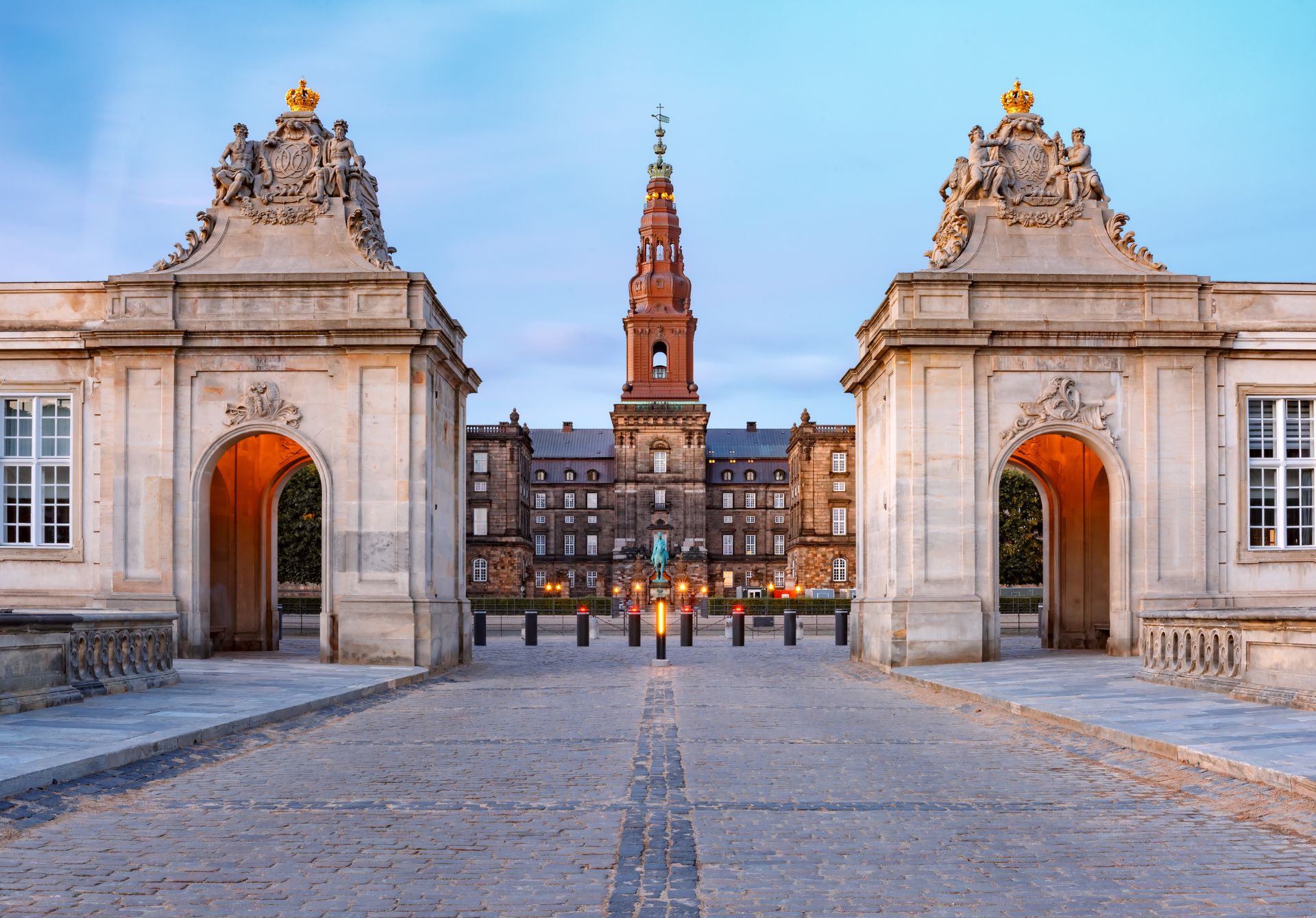
Nestled in the heart of Copenhagen, Christiansborg Palace stands as a monumental testament to Denmark’s rich political and royal history. This extraordinary complex is unique in the world, serving as the only building in the globe that houses all three branches of a country’s government: the executive, legislative, and judicial powers. Its imposing architecture and profound historical significance make it far more than just a governmental building—it is the very pulse of Danish national identity.
Historical Foundations: From Medieval Castle to Modern Seat of Power
The First Royal Castle
The site of Christiansborg has been a center of power since the 12th century. In 1167, Bishop Absalon constructed a formidable castle on this location, which became the foundation for Copenhagen’s political and administrative center. Throughout centuries, the site witnessed multiple reconstructions, each reflecting the architectural and political zeitgeist of its era.
Architectural Transformations
The palace has been rebuilt three times, each reconstruction following devastating fires. The current structure, completed in 1928, represents a magnificent example of neoclassical architecture, blending historical grandeur with modern functionality. Its design incorporates elements from previous iterations, creating a visual narrative of Denmark’s evolutionary governance.
Architectural Marvel: A Closer Look
Structural Highlights
Spanning an impressive 45,000 square meters, Christiansborg Palace is a architectural masterpiece. Its design incorporates multiple architectural styles, with elements ranging from Renaissance to modern Danish design. The palace features over 100 rooms, including the magnificent Great Hall, which can accommodate 400 guests for state banquets and royal celebrations.
Key Architectural Features
- Royal Reception Rooms adorned with intricate tapestries
- The Queen’s Library with over 100,000 volumes
- Parliamentary chambers representing modern democratic principles
- Supreme Court facilities integrated within the complex
Governmental Significance
A Unique Governmental Nexus
What sets Christiansborg Palace apart is its comprehensive governmental role. Here, the Danish Parliament (Folketing) convenes, the Prime Minister’s Office operates, and the Supreme Court conducts its proceedings. This concentration of governmental power in a single location is unprecedented globally, symbolizing Denmark’s commitment to transparent and accessible governance.
Royal and Cultural Heritage
Beyond Political Functionality
While serving as a governmental hub, Christiansborg remains deeply connected to Danish royal traditions. The Royal Reception Rooms host state visits, royal ceremonies, and diplomatic events. The palace’s royal apartments, though no longer a permanent royal residence, continue to play a crucial role in Denmark’s monarchical traditions.
Tourism and Public Access
A Living Museum of Danish History
Today, significant portions of Christiansborg are open to the public, allowing visitors to explore its rich historical spaces. Tourists can visit the Royal Reception Rooms, the ruins beneath the palace, and observe parliamentary proceedings, offering a unique insight into Danish political and cultural life.
As both a historical landmark and a functioning center of governance, Christiansborg Palace continues to inspire, symbolizing Denmark’s commitment to transparency, democracy, and cultural preservation. It stands not just as a building, but as a powerful narrative of a nation’s journey through centuries of political and social transformation.